
Kolkata’s Kumartuli Potters’ Colony Walk
Kumartuli is home to around 400–450 workshops where master sculptors craft iconic clay idols of Hindu gods and goddesses using Ganga clay, bamboo, straw, and traditional materials.
Established in the 18th century as the potters’ quarter of colonial Kolkata, Kumartuli has grown into a global hub, exporting idols across India and worldwide. Today, its timeless artistry continues to shape the soul of Kolkata’s festivals and cultural identity.
Stroll through the historic bylanes of North Kolkata, exploring hidden heritage buildings and traditional homes that echo the city’s cultural and colonial legacy. This Kumartuli heritage walk is a perfect experience for culture enthusiasts, photographers, and curious explorers seeking authentic local traditions.
Kumartuli Walking Tour Itinerary
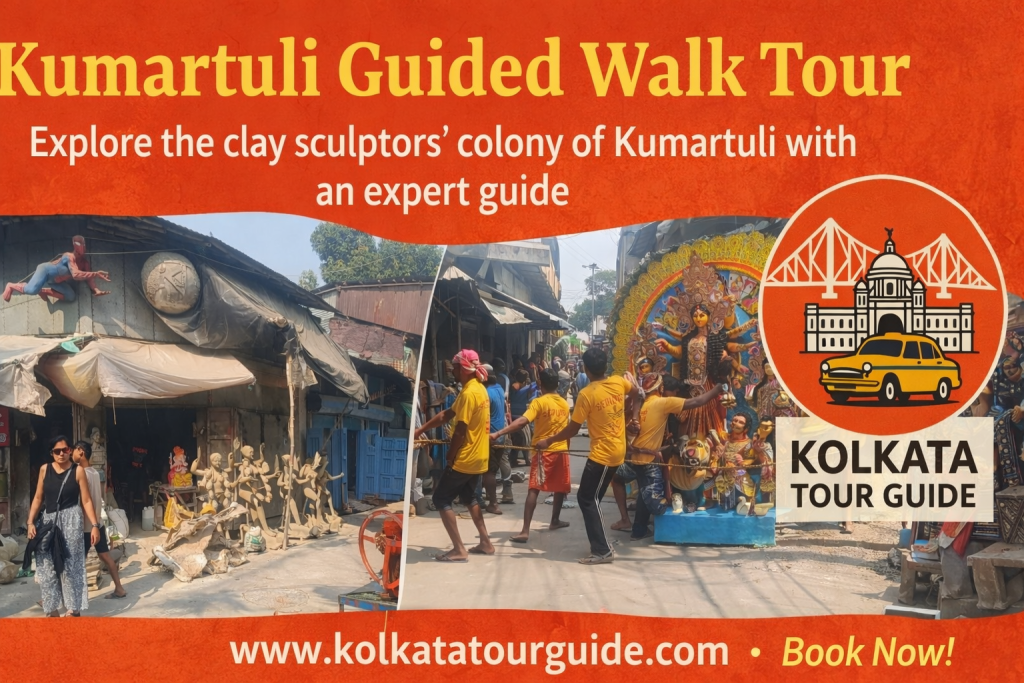
The Kumartuli Guided Walk Tour takes you into one of Kolkata’s most fascinating artisan neighbourhoods. Located in North Kolkata, Kumartuli is famous for its traditional potters and skilled idol makers who transform bamboo, straw and clay into magnificent figures of Goddess Durga and other Hindu deities.
The neighbourhood developed as a settlement for clay artisans in the late 18th century. Today, its narrow lanes remain filled with working studios where generations of craftsmen continue Kolkata’s celebrated sculptural traditions.
Kolkata 3-Hour Kumartuli Walking Tour
Tour Duration: 3 Hours
Tour Time: 8:30 AM – 11:30 AM
Begin your Kumartuli Walking Tour in the heart of the artisan quarter. Walk through its atmospheric lanes and visit traditional idol-making studios where local craftsmen create clay sculptures by hand.
Along the way, discover how artisans build the bamboo framework, prepare the straw structure, apply layers of clay and carefully shape the facial features. Depending on the season, you may also see painting, decoration and finishing work.
Your local guide will explain the history of Kumartuli, the traditions of Bengali craftsmanship and the important connection between the neighbourhood and Kolkata’s world-famous Durga Puja celebrations.
The walk also gives you an opportunity to observe everyday life in this historic part of Kolkata while discovering its artistic and cultural heritage.
Kumartuli Places to Visit Nearby
After exploring the artisan lanes, you can continue your Kumartuli Heritage Walk towards several interesting nearby attractions.
Kumortuli Idol Studios
Explore the famous artisan lanes of Kumortuli, where skilled Kolkata idol makers handcraft clay Durga idols, Hindu deities and traditional sculptures. The workshops offer an authentic glimpse into a living artistic tradition.
B.K. Paul House
Discover the historic B.K. Paul House, an example of Kolkata’s old architectural character. Its traditional design adds another layer to the heritage experience around Kumartuli.
Ganges River Front
Continue towards the Ganges River Front in Kolkata for peaceful views of the Hooghly River, historic ghats and the city skyline. The riverside provides a refreshing contrast to the busy artisan lanes.
Baneshwar Mandir
Visit Baneshwar Mandir, a historic temple that reflects Kolkata’s religious traditions and neighbourhood heritage. Its traditional atmosphere makes it a worthwhile addition to a North Kolkata heritage itinerary.
Jorabagan Police Station
Discover Jorabagan Police Station, associated with Kolkata’s early policing history. Together with the surrounding streets, it provides an interesting glimpse into the evolution of old North Kolkata.
Most of these attractions lie within approximately 2–3 km of Kumartuli, making them suitable additions to a half-day Kolkata heritage walking tour.
Why Take a Kumartuli Guided Walk?
A Kumartuli Guided Walk Tour offers more than sightseeing. It allows you to experience a living neighbourhood where art, religion, history and everyday life come together.
Instead of simply viewing finished sculptures, you can observe artisans at work and understand the traditional techniques behind Kolkata’s famous clay idols. Therefore, Kumartuli is an excellent choice for travellers interested in Bengali culture, Indian art, photography, Durga Puja and Kolkata’s heritage.
Frequently Asked Questions – FAQ’s
Q. What is the Kumartuli Guided Walk Tour?
A. The Kumartuli Guided Walk Tour is a cultural and heritage walking experience through one of Kolkata’s most fascinating artisan neighbourhoods. You’ll explore narrow lanes, traditional idol-making workshops and learn how skilled artisans transform bamboo, straw and clay into beautiful idols of Goddess Durga and other Hindu deities.
Q. What will I see during the Kumartuli Walking Tour?
A. During the walk, you can discover traditional idol-making studios, observe different stages of clay sculpture, explore historic lanes and learn about the artistic traditions and cultural heritage of Kumartuli. The experience may also include nearby heritage areas and riverside surroundings, depending on the itinerary.
Q. How long does the Kumartuli Guided Walk Tour take?
A. A typical Kumartuli walking tour takes around 2 to 3 hours, depending on the route, workshop visits and time spent interacting with artisans.
Q. What is the best time to visit Kumartuli?
A. The period leading up to Durga Puja, particularly from late monsoon through early autumn, is one of the most atmospheric times to visit. Workshops become especially active as artisans work on large numbers of idols. However, Kumartuli remains interesting throughout the year.
Q. Can I see Durga idols being made in Kumartuli?
A. Yes. Kumartuli is famous for its traditional clay idol-making, particularly the creation of Durga idols for Kolkata’s Durga Puja celebrations. Depending on the season, you may see different stages including straw framework, clay application, sculpting, painting and decoration.
Q. Can I take photographs during the Kumartuli tour?
A. Photography is generally possible, but visitors should always ask permission before photographing artisans or entering working studios. Avoid touching unfinished idols and respect the artists’ workspace.
Q. Is Kumartuli Guided Walk suitable for international travellers?
A. Yes. The tour is ideal for international visitors interested in Kolkata culture, Bengali traditions, Indian art, Durga Puja and local heritage. A knowledgeable local guide can also help explain the cultural significance behind the craftsmanship and neighbourhood.
Q. Is Kumartuli suitable for families and children?
A. Yes, provided children are supervised. The lanes can be narrow and busy, especially before Durga Puja, and workshops may contain tools, wet clay and large idols being moved around.
Q. Do I need to pay an entrance fee to visit Kumartuli?
A. Kumartuli is a neighbourhood rather than a ticketed attraction, so there is generally no standard entrance fee to walk through the area. Individual workshops may have their own photography or visitor arrangements.
Q. How should I dress for the Kumartuli Heritage Walk?
A. Comfortable walking shoes and lightweight clothing are recommended. As Kumartuli is a traditional residential and working neighbourhood, respectful and modest clothing is appreciated.
Q. Can I interact with the idol makers?
A. Interaction may be possible when artisans are available and willing to speak with visitors. A guided tour can make these encounters more meaningful while ensuring that visitors respect the artists’ working environment.
Q. Is the Kumartuli Guided Walk available during Durga Puja?
A. The area is especially vibrant in the weeks before Durga Puja, when artisans are completing idols. During the busiest festival periods, however, workshops can become crowded and access may vary depending on the artisans’ workload.
Q. What should I bring for the Kumartuli Walking Tour?
A. Bring comfortable walking shoes, drinking water, a camera or smartphone, and sun protection. During the monsoon or wet season, an umbrella or rain protection can also be useful.
Q. Why should I include Kumartuli in my Kolkata itinerary?
A. A Kumartuli Guided Walk offers a different perspective of Kolkata beyond its major monuments. Instead of simply viewing finished artworks, you experience a living tradition of Bengali craftsmanship, meet the neighbourhood’s artistic heritage and see how clay idols are created by hand.
CONTACT US